
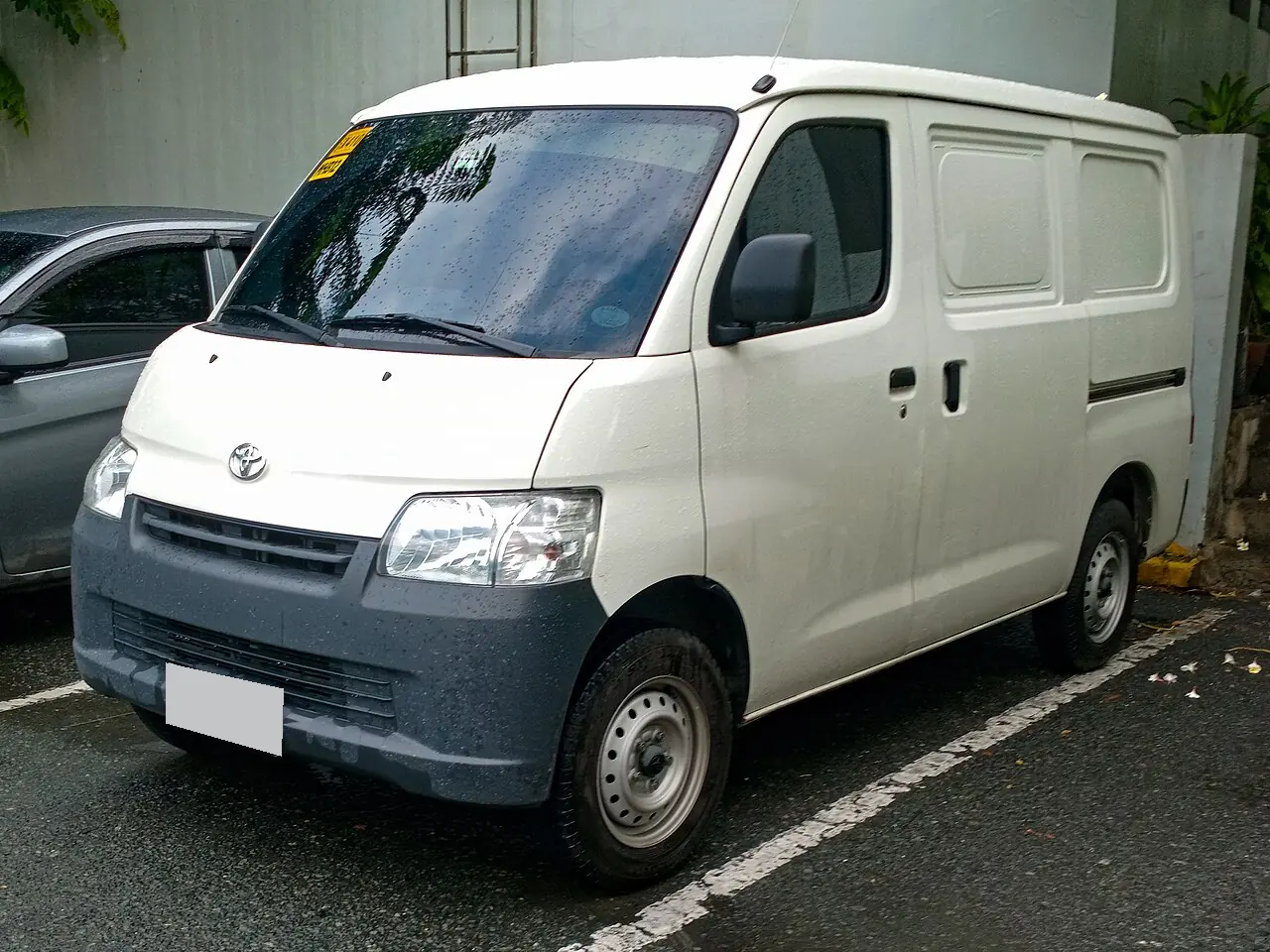
A compact delivery van can be attractive when a business needs enclosed cargo space without a large vehicle. The useful buying question is whether it can complete your actual round with the required load, access and support. Start with a typical dispatch, including the busiest day you expect the vehicle to handle.
Identify the exact LiteAce being offered
Our 2026 LiteAce catalogue entry describes a two-seat commercial panel van with a 1.5 litre petrol engine and four speed automatic transmission. Toyota UAE’s current LiteAce range page also lists that engine capacity, transmission and seating count. Confirm the model year, material or grade code, steering position and allocated vehicle details in the written quotation.
Ask for the specification attachment that applies to the offered unit. The standard van and a converted vehicle should be treated as separate configurations: conversion equipment can change the usable space, weight and operating requirements. A catalogue entry does not establish current stock or confirm that a particular accessory is included.
Measure the packages rather than estimating by sight
The reviewed LiteAce specification sheet gives a cargo area of 2,075 mm long, 1,495 mm wide and 1,305 mm high. These are reference dimensions, not a guarantee that a similarly sized rigid item can pass through a door or fit around every interior obstruction.
Measure your largest package and the normal mix of boxes, crates or equipment. Request the clear door opening dimensions, space between wheel housings and usable floor length after any lining, partition or shelving is fitted. Ask for a practical load demonstration or measured photographs when the fit is close. Keep the original unit images with the agreed order specification.
As a planning example, ten cartons each 400 mm long may fit in more than one arrangement, but the chosen arrangement also needs to accommodate their width, height, stacking limits and unloading order. Use a measured loading plan rather than adding up carton volumes alone. The photograph shows a real Toyota LiteAce; confirm load capacity and equipment on the specific vehicle offered.
Check the working weight as well as the space
Toyota’s UAE specification download lists a 750 kg payload for the standard van. Confirm the meaning of that figure, the exact vehicle’s gross and axle limits, and how occupants and fitted accessories are accounted for. Do not calculate an approved working payload simply by subtracting two rounded brochure figures.
For a planning exercise, 420 kg of goods, 150 kg of occupants and 70 kg of fitted equipment total 640 kg before any other applicable allowances. That arithmetic helps identify what to verify; it is not a loading approval. Have the completed vehicle assessed against the manufacturer’s definitions and limits, and check load distribution as well as total weight.
Review loading access for each stop
The standard van specification describes dual sliding side doors and a lift-up rear door. Check both on the proposed unit and consider which opening will be usable in your loading bay or at the kerb. A rear door that opens upward also needs clearance above and behind the vehicle.
Record how goods will be secured, which parcels must come out first and whether a trolley or other handling equipment travels with the van. Review the floor, tie-down arrangements and any proposed shelving with the supplier. A fit-out should be included in the final space and weight assessment before the order is confirmed.
| Delivery requirement | Evidence to request | Decision it supports |
|---|---|---|
| Largest package and daily mix | Measured load plan and clear door openings | Whether goods fit and can be unloaded in sequence |
| Working weight | Exact limits and fitted equipment weights | Whether the finished vehicle suits the load |
| Frequent side loading | Unit photographs and loading demonstration | Whether the access arrangement suits each stop |
| Narrow approaches or low entrances | Actual exterior dimensions and route measurements | Whether access and parking are practical |
| Conversion or specialist cargo | Written fit-out specification and revised limits | Whether the converted vehicle meets the business brief |
Assess the whole delivery round
List distance, stop count, road conditions, gradients, parking restrictions and loading time. Check the actual vehicle dimensions against narrow approaches and low entrances. Where practical, assess a representative vehicle on a realistic route within its limits, including the time needed to load and unload.
A smaller van that requires a second run may have a different operating cost from one that completes the dispatch in one trip. Compare the timetable and driver hours as well as purchase cost. If the load consistently exceeds the LiteAce’s usable space or approved limits, investigate a larger configuration rather than planning to overload it.
Put support and conversion requirements in writing
Request local servicing information, parts availability and warranty scope for the destination. Compare fuel, tyres, maintenance, insurance and downtime using local quotations or other relevant evidence. Avoid treating a published fuel consumption figure as a promise for a loaded delivery round with frequent stops.
For temperature-controlled or other specialist work, supply the cargo requirements and ask for a separate written conversion proposal. Confirm the finished dimensions, equipment, operating conditions, maintenance needs and remaining load allowance. Do not apply standard van figures automatically to a converted vehicle.
Prepare your LiteAce delivery brief
Send the destination country and port, quantity, required timing, daily parcel dimensions and weights, crew size, route information and essential equipment with your enquiry. Ask for exact availability, original unit photographs, the applicable specification and an itemised quotation covering delivery terms and exclusions.
Use the delivery worksheet below to keep those details together. Browse the inventory, review the vehicle export quotation guide, or use our import cost guide to assemble the wider budget. An agreed load and route brief gives both buyer and supplier a clear basis for the order.