
A vehicle with more seats can reduce the number of departures, but only if the route, loading space and operating arrangements suit it. A smaller vehicle can be useful for smaller groups, yet an extra trip may change the cost calculation. For staff transport, hotel transfers or a private shuttle, begin with the actual journey rather than the model name.
Compare passenger versions of both vehicles
The Hiace name covers different body and seating configurations. A panel van is not the same specification as a passenger Commuter. Toyota UAE’s Hiace range page includes cargo versions as well as passenger information, so check the attachment and material code for the vehicle being offered.
Our reviewed 2026 catalogue entries are the Hiace Commuter and Coaster. The former is described as a 13-seat high roof van, while the latter is a 23-seat bus. Those are configuration references, rather than confirmation that a particular unit is allocated or ready for delivery.
Count usable passenger places correctly
Write down the normal group size and the largest group the service must accommodate. Ask whether the quoted seating total includes the driver and obtain the actual seating plan. The current Hiace passenger specification describes two front places and eleven rear places. Do not treat all thirteen places as fare-paying passenger seats without confirming how the driver is counted.
Toyota UAE lists the 2026 Coaster 2.7 litre model with 23 seats and a six speed manual gearbox. Confirm the driver count and layout on the proposed vehicle too. For example, a requirement to move eighteen passengers in one departure would exceed the reviewed Hiace’s total seating count; a Coaster may deserve investigation, subject to the exact approved passenger capacity and operating requirements.
Compare the listed configurations
| Buyer check | Reviewed Hiace Commuter entry | Reviewed Coaster entry |
|---|---|---|
| Body and seating | High roof passenger van, 13 seats in total specification | Passenger bus, 23 seats in specification |
| Engine reference | 3.5 litre petrol | 2.7 litre petrol |
| Transmission reference | Six speed manual or automatic by material code | Six speed manual |
| Access and luggage | Confirm side door, step height and rear luggage opening on the unit | Confirm folding centre door, steps, racks and luggage opening on the unit |
| What still needs confirmation | Exact grade, allocated unit, equipment and destination approval | Exact grade, allocated unit, equipment and destination approval |
Use the Hiace specification sheet and Coaster specification sheet as the starting documents for the quotation. Different markets and model years can have different engines, transmissions and seating plans. Attach the applicable version to the order rather than combining features from several brochures.
Test the luggage and boarding requirement
A seat count does not establish luggage capacity. Record the number and dimensions of bags, equipment cases or mobility aids carried on a typical trip. Ask for measured usable space with every required seat available and for the loading arrangement to be demonstrated. Keep aisles, exits and passenger places clear, and confirm the permitted arrangement with the destination operator.
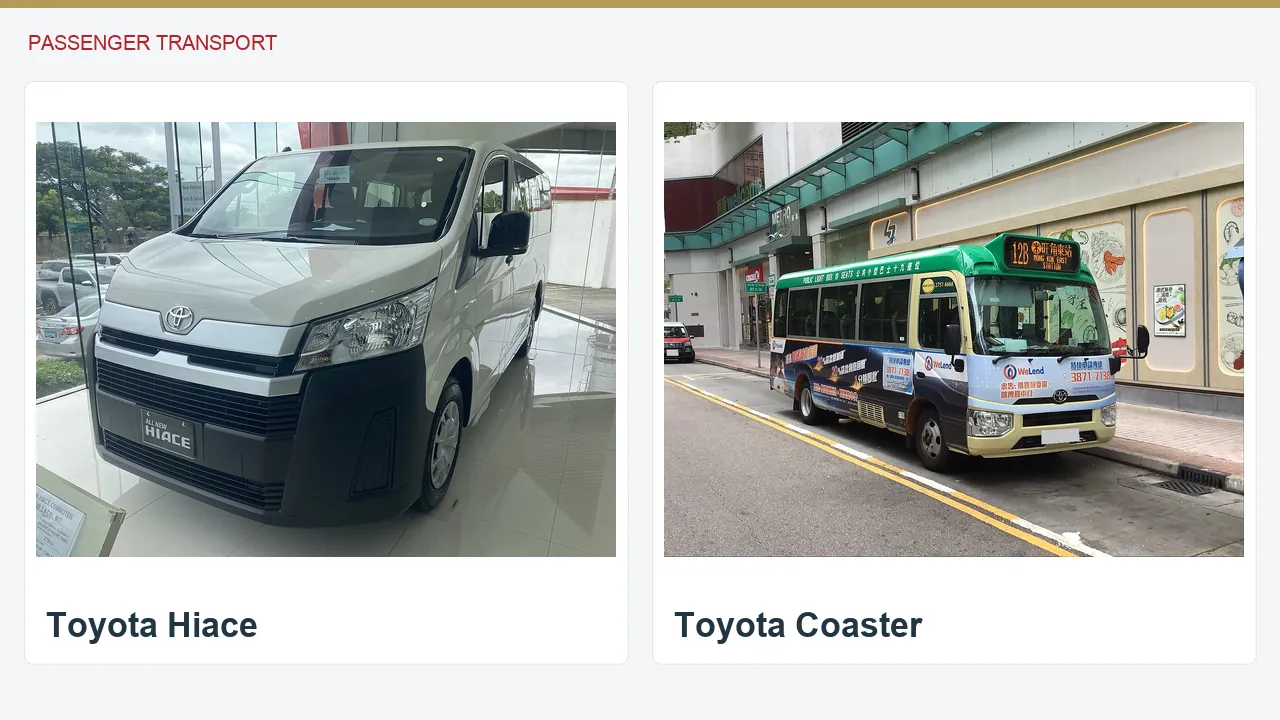
Review the actual doors, steps, handholds, aisle and access to rear rows. An older passenger, a worker carrying equipment and a hotel guest with a suitcase may have different boarding needs. Request photographs or video of the proposed vehicle’s interior and a practical assessment where possible. The photographs show real Hiace and Coaster vehicles in different markets; exact seating and equipment must be checked on the offered unit.
Match the vehicle to the whole route
List narrow approaches, low entrances, turning areas, stopping points and overnight parking. Obtain the exact vehicle dimensions and turning information, then check them against those locations. Do not assume a route is suitable because another van or bus already uses it.
Consider the timetable as well as peak demand. As a planning example, two smaller departures may suit staggered shift times, while a single larger departure may fit a group that must arrive together. Compare the resulting driver hours, vehicle availability and backup arrangements. This is an operating decision for your route, rather than a universal advantage for either model.
Compare costs on the same service brief
Request quotations with the same destination, delivery scope, required timing and essential equipment. Include fuel, maintenance, tyres, insurance, driver arrangements and a realistic allowance for downtime in your operating comparison. Seek local cost evidence; do not assume a fixed fuel saving or a lower cost per passenger from the vehicle size alone.
Check air conditioning coverage, seat belts and any required safety or accessibility equipment on the exact grade. Before purchase, have the destination importer and operator confirm registration eligibility, permitted passenger use, driver licence class, insurance and any local operating requirements. Written confirmation should cover the proposed configuration, not only the model family.
Prepare your passenger transport brief
Send the destination, quantity, normal and peak passenger numbers, luggage requirements, route details, preferred transmission and essential equipment with your enquiry. Ask for availability, the seating plan, original unit photographs and an itemised quotation. Record who supplies the export documents and handles shipping and destination clearance.
Use the worksheet below to keep both offers comparable. Browse our inventory, review the export documents checklist, or build the wider budget with the vehicle import cost guide. The next step is an agreed specification and service brief that your purchasing team and operator can both review.