
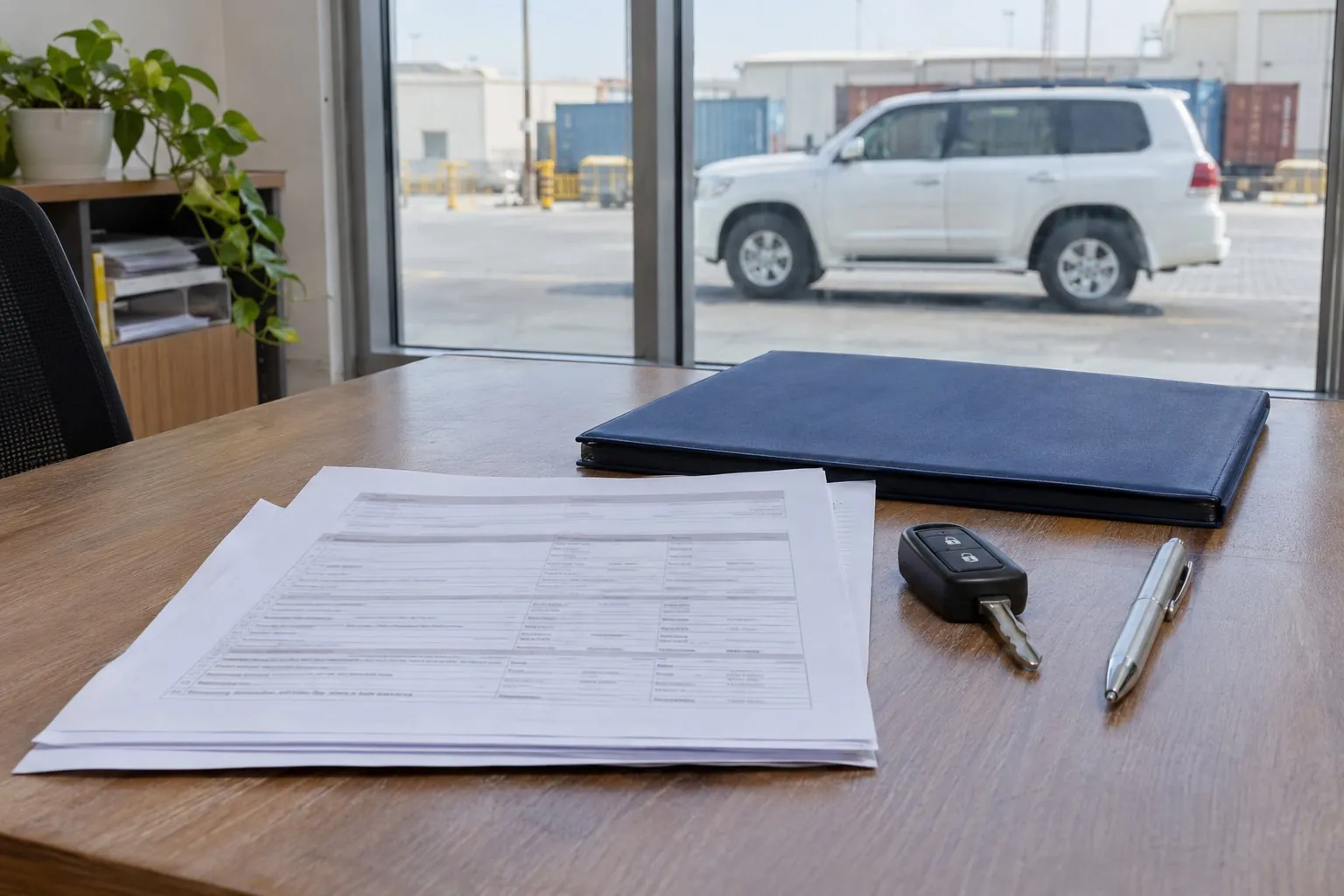
The vehicle has been selected. The price is agreed. A shipping quotation is on the table. Then a familiar question arrives: “Which documents do I need?”
There is no useful answer that starts and ends with a single certificate. A vehicle purchase involves several separate records: what was sold, who owns or can release it, how it leaves the UAE, how it travels and what the receiving country needs before clearance and registration.
The practical approach is to agree the document pack before paying a deposit, then check the final versions before shipment. A correct export document does not automatically make a vehicle eligible for import at its destination.
If you are still planning the purchase itself, begin with our guide to buying a vehicle from the UAE for export. This article focuses on the paperwork and the people responsible for supplying it.
Start with the vehicle’s current status
Before asking for a standard list, tell the seller whether the vehicle is registered in the UAE, new and unregistered, or held under a free zone, bonded or re-export arrangement. Those situations should not be treated as interchangeable.
For a Dubai-registered vehicle, the RTA’s current service includes issuing an export certificate through its vehicle registration cancellation process. Check the RTA service requirements for the owner, intended movement and application route. Do not assume Dubai’s process applies unchanged to another emirate.
A new, unregistered vehicle has no existing road registration to cancel. Ask the supplier and customs broker which ownership, clearance and customs records support its particular export route.
For vehicles intended for re-export, ask the broker to identify the declaration type and any earlier import records needed. The 2025 unified customs procedures guide treats export and re-export as distinct procedures. The correct route depends on the transaction and customs status.
Build a document responsibility list
Use the table below as a conversation with your supplier and destination agent. It is a planning checklist, not a claim that every document is mandatory for every shipment.
| Document or record | What it helps establish | Who to ask |
|---|---|---|
| Commercial invoice | Seller, buyer, vehicle description, quantity and transaction value | Contracting seller |
| Vehicle schedule or packing list | Which VINs and units belong to the shipment | Seller and logistics provider |
| Ownership, registration or clearance records | The vehicle’s status and supporting documentary history | Seller and relevant authority |
| Licensing export certificate, where applicable | The licensing step for the vehicle’s registration status | Seller and licensing authority |
| Customs export or re-export declaration | The declared customs movement | Appointed customs broker |
| Bill of lading, sea waybill or other transport document | Shipment parties, route and transport details | Carrier or freight forwarder |
| Insurance certificate or policy, if arranged | Evidence of the agreed cargo cover | Insurer or insurance arranger |
| Origin, conformity or inspection documents, where required | Requirements specified by the receiving authorities | Destination agent and relevant issuer |
| Import permit or importer registration, where required | The buyer’s authority to bring the vehicle into the market | Buyer and destination authorities |
Put a name and a deadline against each item. “The shipping company will handle it” leaves too much unresolved unless the appointed company confirms exactly what it will obtain and deliver.
Check the invoice against the agreement
Start with the legal names of the seller and buyer. A trading name on a message should not silently replace the company named in the purchase agreement.
Check the invoice number, date, currency, quantity and agreed price. The description should identify the vehicle clearly enough to reconcile it with the agreed specification. Once units are allocated, establish how VINs will appear on the invoice or an attached schedule.
For a fleet order, insist on a usable unit list. A description such as “ten pickups” is difficult to reconcile when vehicles differ by engine, transmission, model year or equipment.
Do not assume a pro forma invoice is the final document your destination customs agent will accept. Ask when the final commercial invoice will be issued and whether your receiving market needs a particular format, signature, attestation or translation.
Make the VIN your reference point
A small typing error becomes harder to correct after documents have been issued and the shipment is moving.
Match the VIN or chassis number against photographs of the vehicle’s physical identification and the relevant purchase, inspection and shipment records. Compare the full identifier rather than the last few characters. Where an older vehicle uses a different identification format, ask the destination agent how it must be recorded.
Keep one controlled vehicle schedule. When a unit changes, update the schedule and all affected drafts together. Do not let a replacement vehicle travel under the paperwork prepared for the original allocation.

Keep licensing and customs documents separate
An export certificate issued through a vehicle licensing process and a customs export declaration serve different purposes. Ask for each applicable document by name rather than requesting “the export paper.”
For a registered vehicle, confirm the registration cancellation, plate handling and any movement arrangements with the responsible licensing authority. If someone applies on the owner’s behalf, check the authority’s current representation requirements.
Separately, ask the broker to confirm the customs procedure, supporting records and the party named as exporter. Request copies of the relevant completed documents when available, and ask which departure or exit records must be retained after dispatch.
Avoid paying for local registration simply because someone says it is always necessary before export. First establish the documentary route for the exact vehicle status.
Review the transport draft before it is issued
Ask the forwarder when a draft bill of lading or other transport document will be available for approval. Then check the shipper, consignee, notify party, destination port, unit count and vehicle identifiers where recorded.
The consignee needs particular attention. Ask your destination agent which legal entity should appear and what details it requires. A last-minute change of importer can affect more than the name on the document.
Confirm the release arrangement too. Depending on the document and carrier process, collection may rely on original documents, an authorised electronic release or another agreed method. Ask who authorises release, which charges must be settled and what the receiving agent needs before collection.
Do not treat every sea waybill and bill of lading as interchangeable. Have the carrier explain the document being issued and how release works for that shipment.
Agree the VAT evidence responsibilities
Do not assume that an overseas buyer’s address is enough to establish zero-rating.
The Federal Tax Authority’s VATP040 clarification explains documentary evidence for exports, including specified combinations of customs, official, commercial or shipping evidence. A sales invoice alone does not settle the evidence question.
Ask the supplier to put the applicable VAT treatment, evidence requirements and relevant deadlines in writing. If a VAT deposit or refund arrangement is proposed, record its conditions and who must return the required evidence to the supplier. Keep this separate from destination duties and taxes.
Ask the destination agent to approve the pack
Send draft documents to a licensed destination clearing agent before final issue and dispatch. Ask for a written list of the records needed for customs clearance and, separately, registration.
A certificate of origin should not be confused with a certificate of conformity. One concerns origin; the other addresses specified technical requirements. Buying a vehicle in the UAE does not make it UAE-manufactured.
Check whether the destination requires an import permit, inspection before shipment, emissions or safety evidence, translations, attestations or original documents. These requirements can depend on the country, vehicle category, age and importer.
Most importantly, obtain this advice before buying. Discovering that an essential approval had to be issued before shipment is a much more difficult problem than correcting a draft invoice.
Start your enquiry with the destination and vehicle details
Browse our vehicle inventory, then contact Consolidated Automotive with your destination country and port, intended importer, preferred vehicle, quantity and timing. Include any document requirements already supplied by your destination agent.
The aim is straightforward: agree what paperwork the transaction needs, know who will supply it and resolve discrepancies while the vehicle is still within reach.