
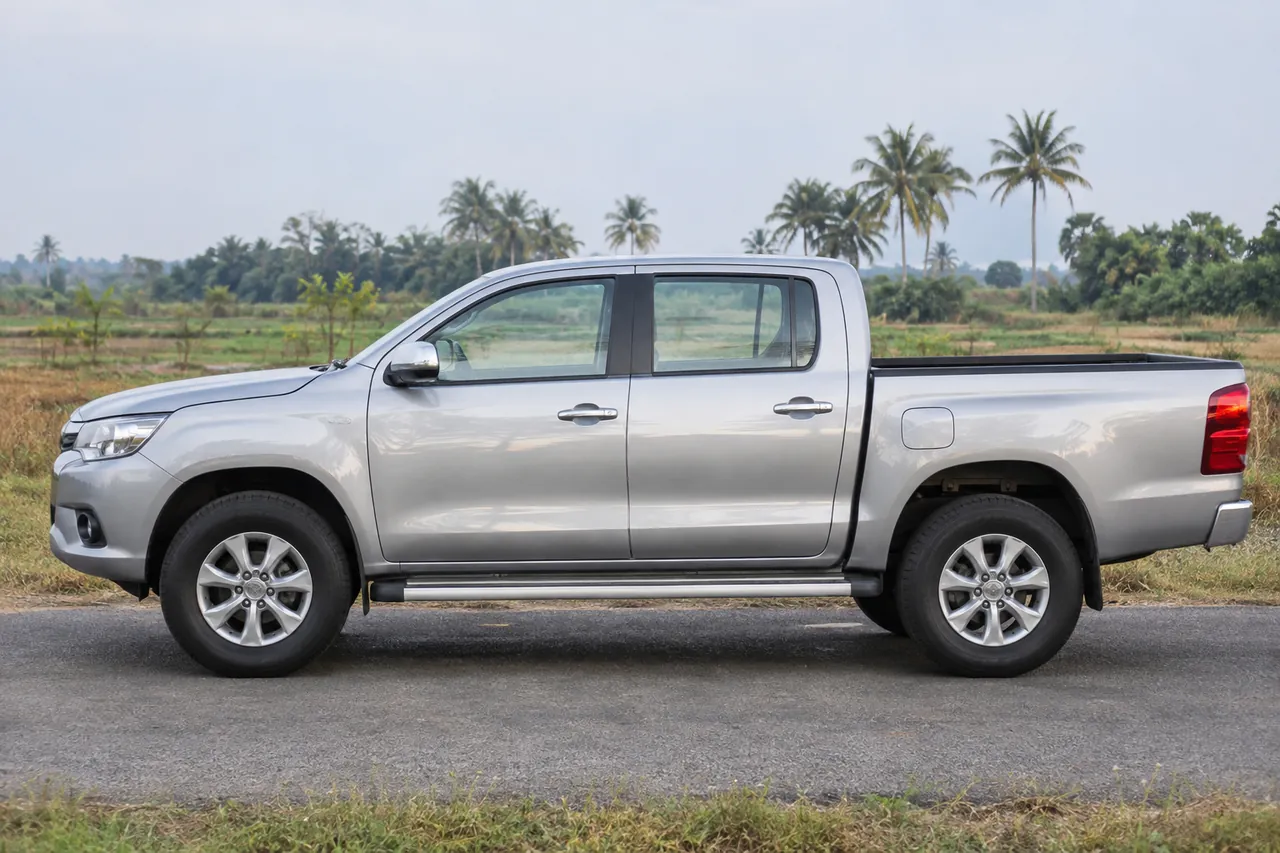
The Hilux name covers several configurations. A familiar badge can sit on a vehicle with a different engine, cab or equipment list from the one you expected. For an export purchase, the useful starting point is a written requirement that a supplier can match to a specific unit. Keep the specification, destination approval questions and quotation together as you work towards an order.
Identify the model year before comparing equipment
Our Hilux 2026 catalogue entry lists a 2.7 litre petrol, 4x4, six-speed automatic configuration. Confirm the grade, model code, build date, allocated vehicle and current availability in the quotation.
At the time of this guide's review on 12 November 2026, Toyota UAE's main Hilux page presents the 2027 range. It lists 2.7 litre petrol and 2.8 litre turbo diesel offerings with six-speed automatic transmission and 4x4. Those published details belong to the stated model year. Ask the supplier which year and market each specification attachment covers before applying its features to the unit you are considering.
Record model year and manufacture date separately. Once a VIN or chassis number is allocated, reconcile it with the agreed specification and available manufacturer identification records. If the order begins before allocation, agree when those details will be supplied and how differences will be handled.
Write the job requirement first
Describe the work in a few concrete lines. Record how many people travel, the heaviest routine cargo, its dimensions, the route surfaces and any towing or body equipment. Add the destination country, intended use, steering side and required timing. A fleet buyer should also identify which workshop will service the vehicles and any equipment already standard across the fleet.
| Requirement to send | Confirmation to request |
|---|---|
| Passenger count and cab preference | Cab layout, seats, belts and rear access |
| Routine cargo and permanent accessories | Payload and axle limits for the exact configuration |
| Cargo dimensions and loading method | Usable bed measurements and body equipment |
| Paved roads, tracks and seasonal conditions | Drive system, modes and operating instructions |
| Destination and intended registration use | Required approvals and vehicle documents |
| Fuel and workshop arrangements | Exact engine code, service schedule and support |
| Quantity and delivery timing | Allocation plan, included services and payment milestones |
Ask the supplier to return the requirement with each item confirmed or clearly identified as unresolved. That gives you a practical list for the quotation review and inspection.
Select the engine and transmission together
Start with the fuel available on the routes and the service support at destination. Give a local service provider the proposed engine and model codes and ask about routine parts, fluids, diagnostics and service intervals. If you operate several vehicles, consider whether the proposed unit fits the workshop's existing skills and parts arrangements.
Our listed 2026 Hilux configuration is petrol and automatic. If you want a diesel or manual vehicle, request a separate offer with its model code, market and model year clearly identified. Check its specification independently rather than transferring equipment from the petrol automatic listing.
For operating-cost estimates, use figures for the exact variant and record the basis of any consumption assumption. Ask what conditions the manufacturer's published figure represents and consider your expected load and duty cycle when budgeting. Obtain written warranty terms and confirmation of who would support a claim in the destination country.
Confirm how the drive system suits the route
Specify the surfaces, gradients and low-speed work the vehicle will encounter. Ask the supplier to identify the drive system and fitted differential equipment on the quoted grade, then obtain the relevant operating instructions. Confirm which modes are available and the conditions in which each should be used.
A vehicle can have the required drive layout and still need different tyres, cargo equipment or preparation for the job. List those items separately and ask how their fitment affects the vehicle's limits, servicing or warranty arrangements. Keep optional accessories distinct from the factory equipment in the quotation.
Check cab and load capacity against the exact unit
Use the passenger and cargo requirement to assess the proposed cab. Ask for clear cabin photographs showing seating, access and the fitted controls. Confirm the air conditioning, safety equipment and storage that matter to daily use. If a feature is essential, have it named on the order.
Request payload, gross vehicle mass, axle and towing information for the exact configuration. Include occupants, cargo and permanent accessories in the load discussion. Measure the cargo against usable bed space and the loading access, including the space between wheel housings. If towing is required, ask for the applicable trailer and combination limits and confirm the coupling arrangement.
Have an inspector check the allocated unit against the agreed specification before the relevant payment milestone. The remote buying guide explains how to connect vehicle identifiers, inspection evidence and transaction documents.
Resolve destination eligibility and quoted scope
Send the proposed specification, model code, build date, steering side, fuel and emissions information to the destination authority or a qualified local agent. Ask what is needed for import clearance and for registration in the intended use. Share any required certificate or inspection with the supplier before acceptance.
Use the export documents guide to assign who supplies each item. Then check the vehicle price alongside origin services, freight, insurance and destination costs. The quotation review guide helps you reconcile inclusions, exclusions, deposit conditions and evidence required before the balance.
If you are also considering an L200, the pickup comparison provides a framework for assessing the two catalogue configurations against the same work.
Request your Hilux specification quotation
Send the destination, passenger count, cargo, route conditions, fuel preference, transmission, drive requirement and quantity. Include the required model year, equipment and any destination approval conditions already identified. Ask for a dated quotation naming the exact grade and model code, with allocation, inspection, delivery and payment milestones. Send your Hilux enquiry.